
Better Mobility Starts with Your Input - Tell INCOG Where Transportation Investments Should Go Next

Over the past six months, the INCOG Congestion Management Process Plan (CMPP) team has evaluated how people and goods move throughout the Tulsa metropolitan area and identified strategies to improve travel reliability, safety, and mobility.

Based on community feedback, stakeholder input and guidance from the Advisory Committee, a CMPP Focus Network was developed to serve as the basis for monitoring congestion and informing future transportation investment decisions.


WE WANT TO HEAR FROM YOU!

Your feedback will help validate the findings and reflect the needs of communities across the region. Your input will help shape transportation improvements that support a safer, more reliable, and more connected transportation system.

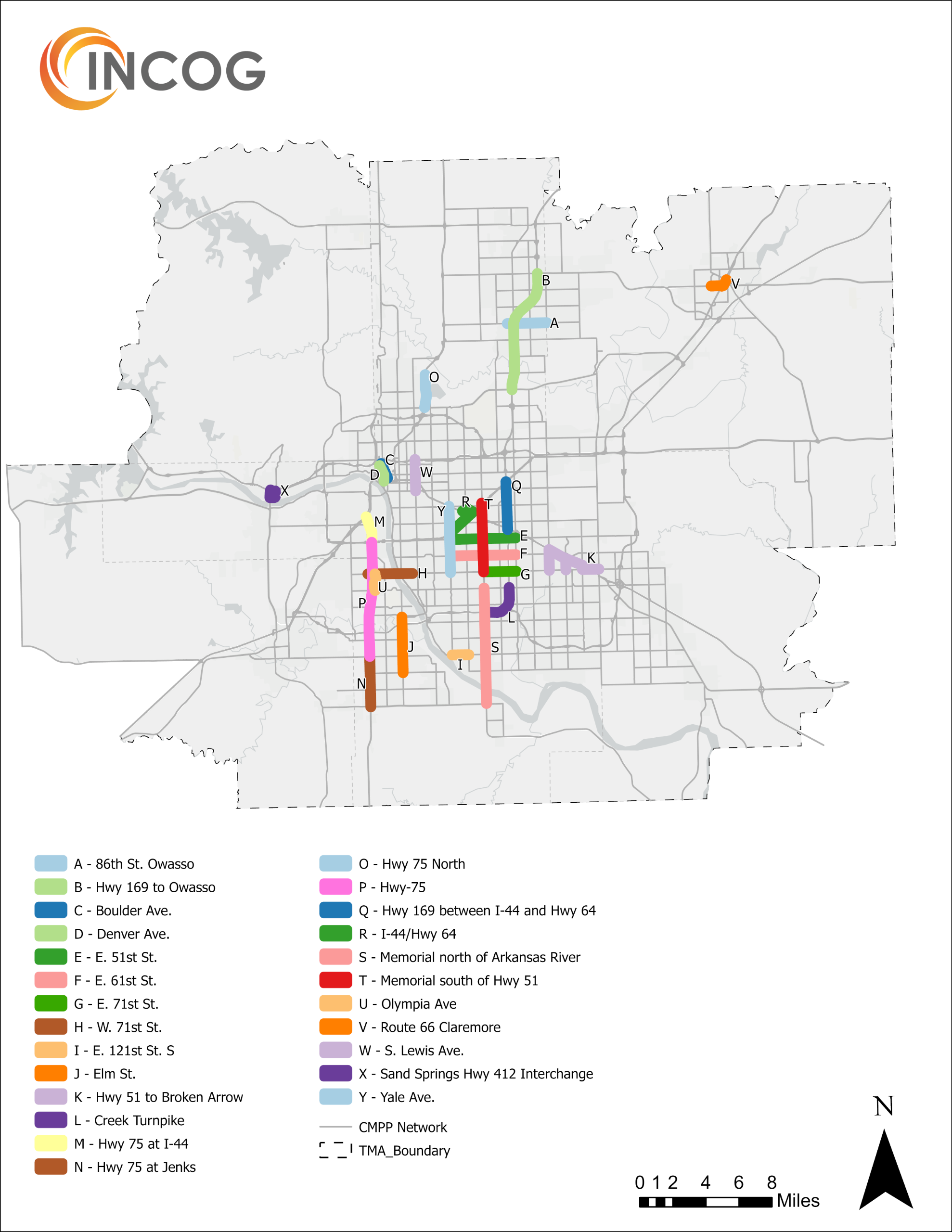
Please review the map and respond to the three corresponding questions below.

The Top 25 Identified Corridors for Congestion Improvements

Map of greater Tulsa showing 25 identified corridors for congestion management in different colors.

Congestion Management Strategies & Solutions

Transportation agencies use a variety of tools to manage congestion. Some focus on making better use of existing roads, others improve transit or travel options, and some involve roadway improvements. The categories below represent the types of strategies that may be considered as part of the INCOG Congestion Management Process. We are interested in hearing which approaches you believe deserve the most attention across the region.

  • Travel Demand Management

    What is it?

    Travel Demand Management strategies reduce the number of vehicles on the road or shift trips to different times, routes, or travel options.

    When would we use it?

    These strategies are often used when congestion is concentrated during rush hour and there is an opportunity to reduce peak-period traffic without building new roads.

    Examples

    • Flexible work schedules and telework
    • Carpool and vanpool programs
    • Employer commuter incentives
    • Park-and-ride programs
  • Traffic Operations

    What is it?

    Traffic Operations strategies improve how existing roads function by making traffic move more smoothly and efficiently.

    When would we use it?

    These solutions are often used when congestion is caused by busy intersections, turning movements, closely spaced driveways, or other roadway operations issues rather than a lack of roadway capacity.

    Examples

    • Improved traffic signal timing
    • Turn lanes at intersections
    • Roundabouts
    • Access management along commercial corridors
  • Public Transportation Improvements

    What is it?

    Public transportation strategies improve transit service and make it easier for people to choose transit for some of their trips.

    When would we use it?

    These solutions are most effective in areas with concentrations of jobs, housing, shopping, or community destinations where more people could reasonably use transit.

    Examples

    • More frequent bus service
    • Expanded transit routes
    • Bus Rapid Transit (BRT)
    • Improved bus stops and shelters
  • Transportation Technology & System Management

    What is it?

    These strategies use technology, real-time information, and coordinated operations to manage traffic more efficiently and respond to changing conditions.

    When would we use it?

    These solutions are often used where crashes, special events, construction, or unpredictable traffic conditions create delays, and can improve reliability without expanding roadways.

    Examples

    • Coordinated traffic signals
    • Real-time traffic monitoring
    • Dynamic message signs
    • Crash and incident management programs
  • Roadway Design & Capacity Improvements

    What is it?

    These strategies involve physical changes to the roadway network to reduce bottlenecks or accommodate growing travel demand.

    When would we use it?

    These solutions are generally considered when other strategies alone cannot adequately address congestion, safety concerns, or growth-related transportation needs.

    Examples

    • Intersection improvements
    • Additional turn lanes
    • New roadway connections
    • New bridge crossings
  • Walking, Biking, Land Use & Regional Coordination

    What is it?

    These strategies improve travel options and reduce the need for longer vehicle trips by creating more connected communities and transportation networks.

    When would we use it?

    These solutions are often long-term investments that help people walk, bike, take transit, or reach destinations more easily while supporting future growth.

    Examples

    • Sidewalk and trail connections
    • Bicycle facilities
    • Mixed-use development
    • Better connections between neighborhoods, schools, jobs, and services